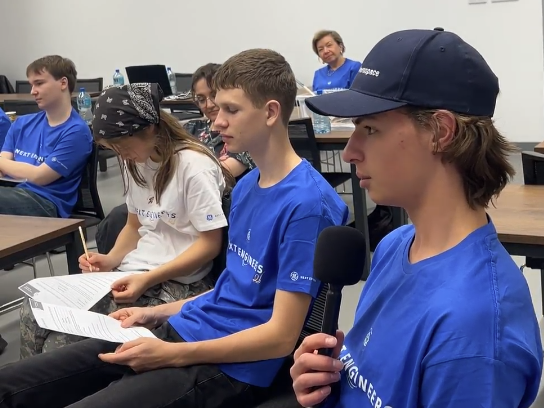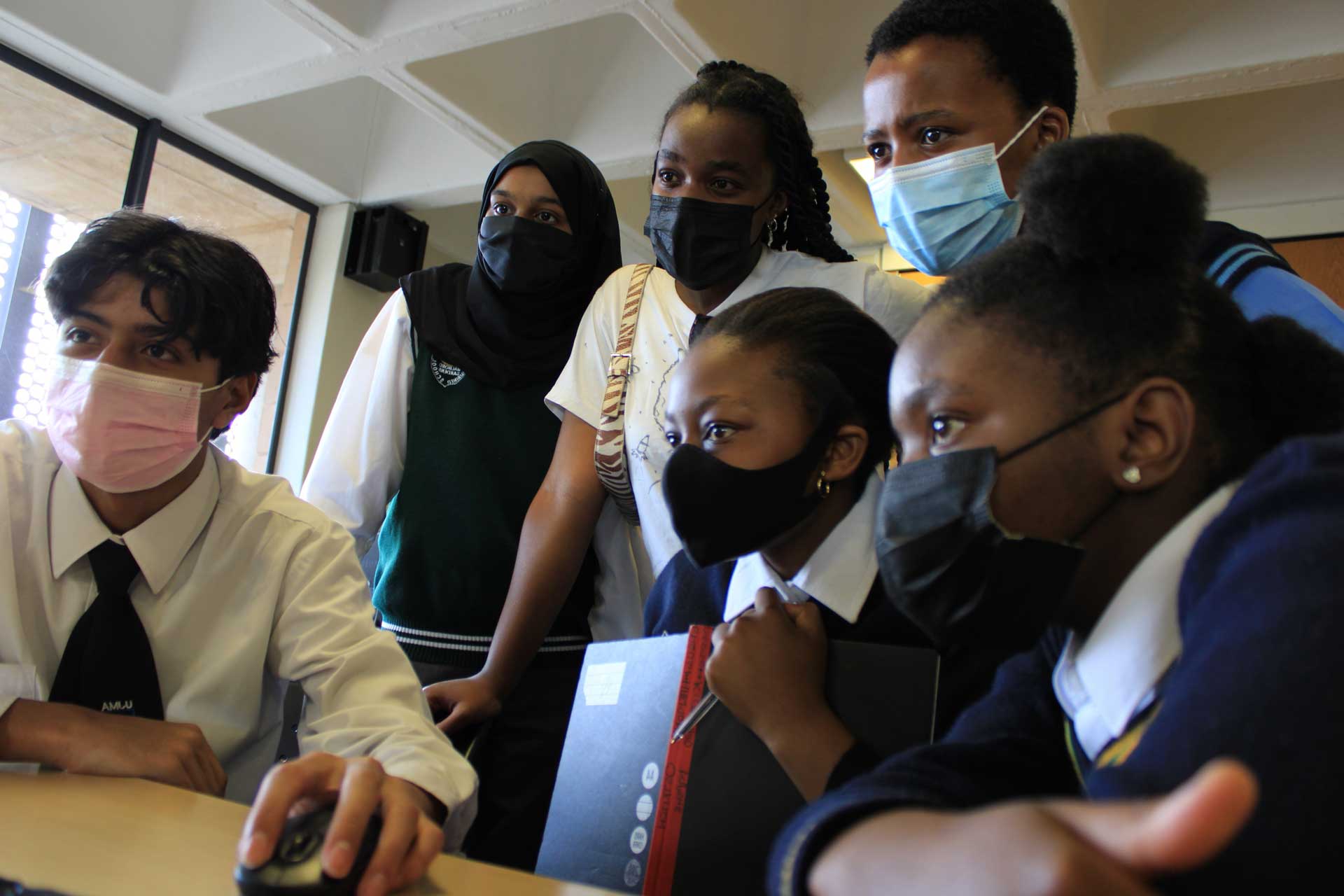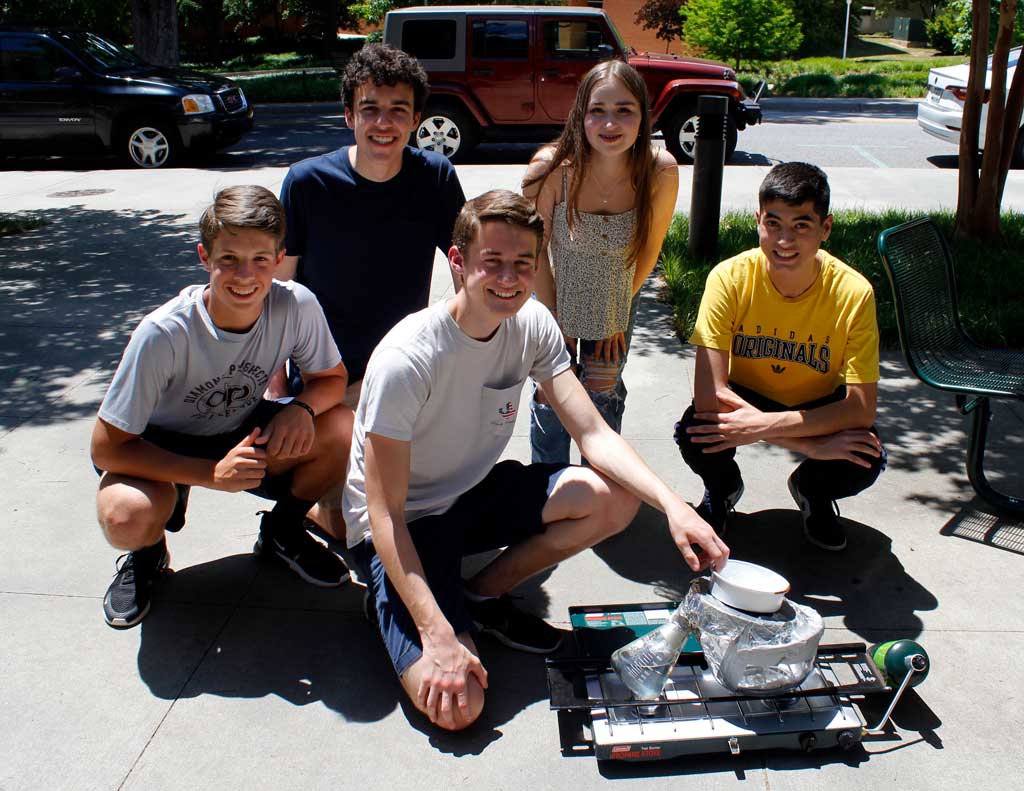
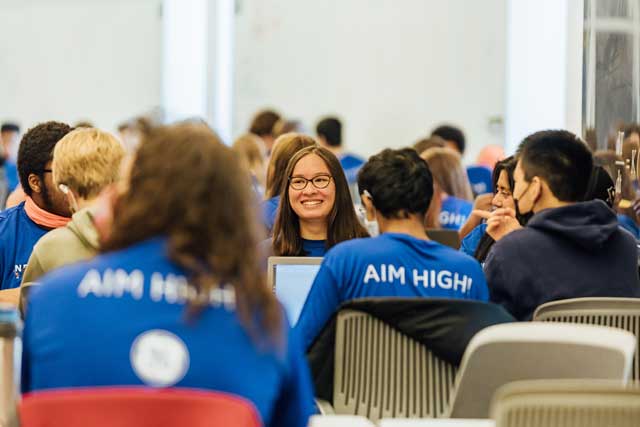

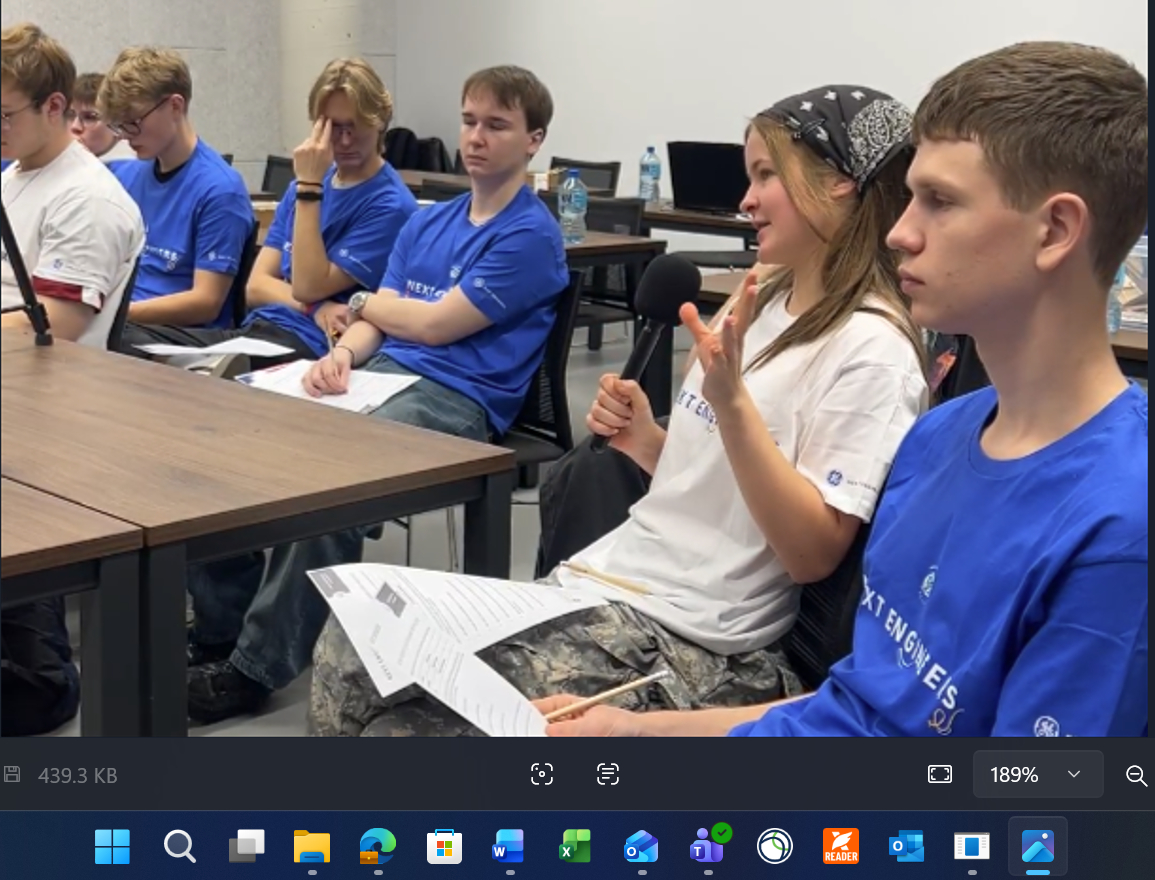
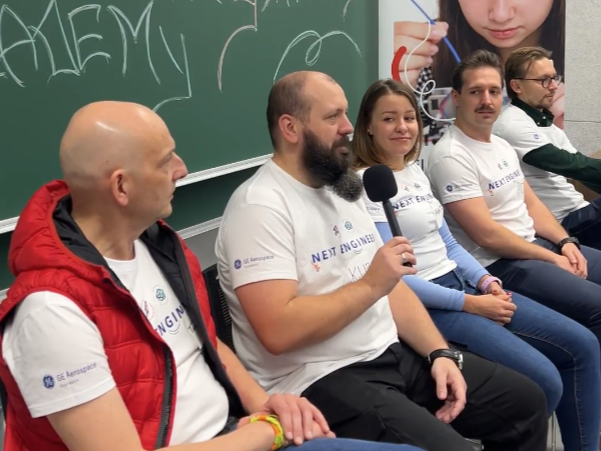
What does an engineer’s day really look like? What kind of stress comes with working on global-scale projects? And what truly matters at the very start of a career? Held in the format of a press conference, the “Interview with an Engineer” session gave our Academy students the opportunity to ask questions directly to five GE Aerospace engineers who offered diverse perspectives on working in engineering.
At the starting point
The session took place at the moment when participants are beginning to make important decisions about their future education and career paths. Instead of a slide-based presentation, the meeting was designed as an open Q&A session with participants fully shaping the direction of the conversation.
From the outset, GE Aerospace engineers emphasized that there is no single “correct” path into the profession. Their own careers included changes in fields of study, shifts between industries, and decisions made along the way rather than according to a fixed plan.
Questions that really matter
The first questions focused on everyday work: what a typical day looks like, and how office-based work differs from project work. The discussion quickly moved toward real challenges.
One of the most frequently raised topics was stress. Engineers spoke openly about their first technical reviews and DDRs (Detail Design Reviews), presenting in English in front of international teams, and the responsibility that comes with making technical decisions under time pressure.
Specific stories were shared – from early presentations that left speakers drenched in sweat, to moments when a single critical question disrupted the flow entirely, highlighting the importance of clear communication and knowing when to slow down.
The press conference format gave the discussion structure and momentum, allowing for in-depth questions and clear, experience-based answers from the engineers.
First-hand answers
One key message came through clearly: in engineering work, stress is inevitable but it changes over time. Early on, it is driven mainly by uncertainty and first-time experiences. Later, it stems from responsibility for multiple parallel tasks and team-level decisions.
Engineers compared their work to juggling an increasing number of balls. What becomes essential is prioritization, accepting limitations, and recognizing that not everything can be delivered perfectly at the same time.
At the same time, they emphasized that GE Aerospace strongly values a culture of mutual respect. Questions asked during technical reviews are not meant to expose mistakes, but to improve solution quality and ensure safety.
How innovation happens
A significant part of the conversation focused on innovation and technological risk. Engineers explained that in aviation, innovation rarely takes the form of sudden revolutions. Much more often, it is a long, carefully managed evolutionary process.
New solutions move through successive stages: conceptual analyses, technical and business reviews, detailed calculations, component testing, and multi-year testing and certification campaigns. Only after meeting rigorous safety requirements can they be implemented in aviation engines.
The discussion also covered shorter project sprints, in which small engineering teams focus on solving a single, well-defined problem. These efforts often lead to smaller but meaningful improvements – real “game changers” that enhance efficiency and reliability.
Passion, skills, and starting a career
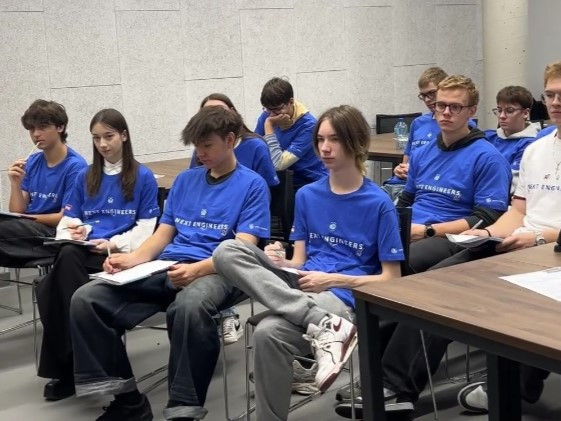
Participants also asked about hobbies, passions, and early career steps. Engineers noted that interests from childhood and school years often return later in transformed ways, and that a non-linear path does not rule out a successful engineering career.
They also highlighted the importance of soft skills – communication, teamwork, and the ability to explain complex technical topics clearly. In recruitment, motivation, attitude, and additional activities such as student organisations, academic clubs, or independent projects matter just as much as technical knowledge.
As emphasised during the session, lack of formal work experience is rarely the deciding factor. What matters more is the ability to learn, take responsibility, and demonstrate a genuine drive to grow.
Key takeaways from the session
The “Interview with an Engineer” session offered our students a valuable opportunity to confront their early ideas about engineering with the real-world experiences of practitioners. The discussion went beyond technical topics – addressing issues such as stress and responsibility, teamwork, and how innovation processes unfold in everyday engineering work.
Importantly, the questions focused on challenges and dilemmas the participants will face at later stages of their educational and professional journeys – from choosing a field of study to gaining their first experience in the workplace. Direct conversations with practising engineers helped them test assumptions, better understand what awaits them at university and in professional life, and approach future educational decisions with greater awareness and confidence. Grounded in authentic, first-hand accounts, the session supported students in building clarity and readiness for choices they will encounter in the years ahead.